

What a Hospitality Lighting Design Consultant Does
- Mike Moss

- 10 minutes ago
- 6 min read
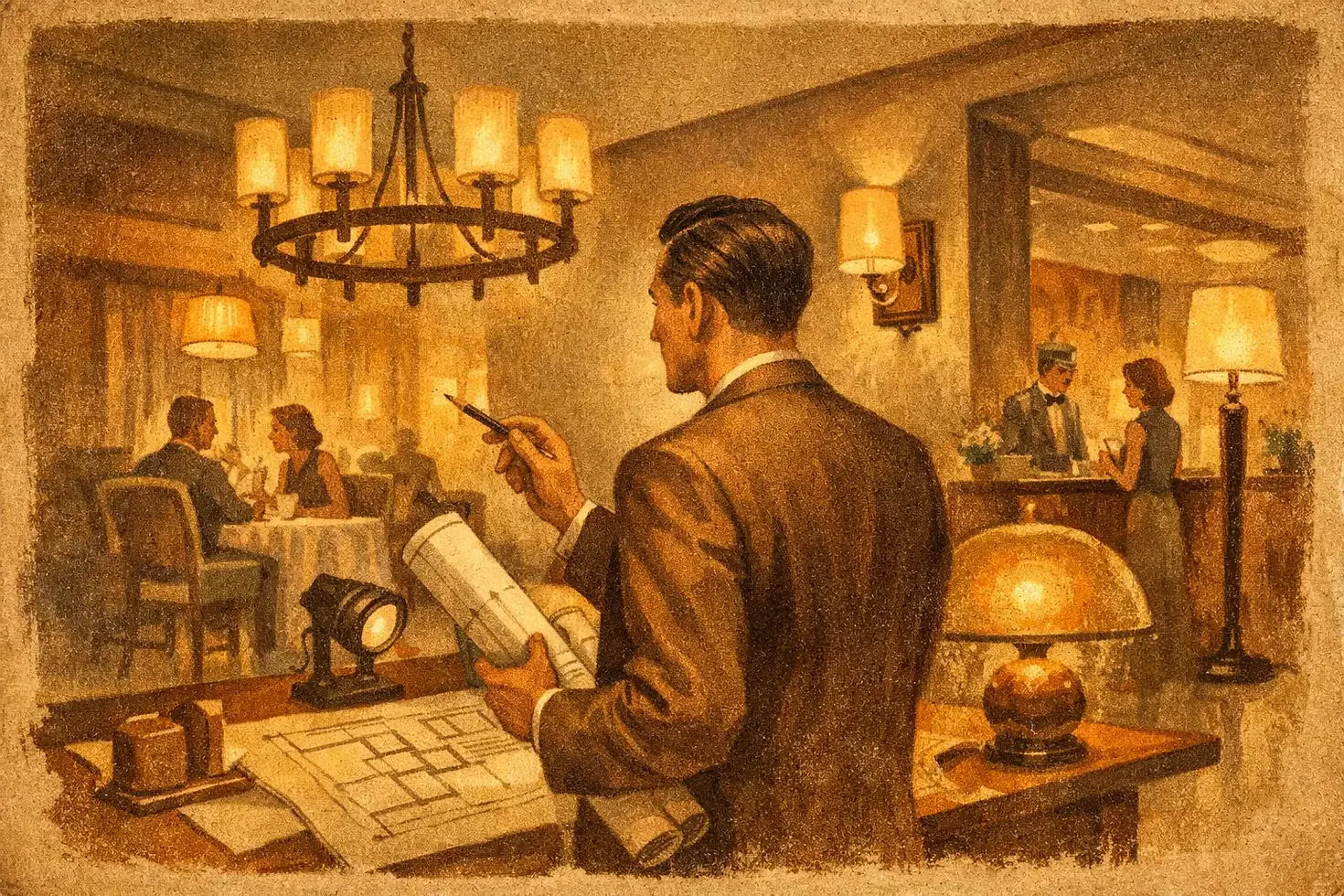
A guest may never name the lighting that made a lobby feel calm, a restaurant table feel intimate, or a courtyard feel worth lingering in after sunset. Yet they feel the result immediately. A hospitality lighting design consultant turns that emotional response into a deliberate, buildable system - one that supports the architecture, serves the staff, and gives a property its own visual character.
For hotels, restaurants, tasting rooms, clubs, spas, and boutique retreats, lighting is not a decorative afterthought. It directs attention, establishes pace, reveals material, and changes how long people choose to stay. The strongest work combines artistic vision with the technical clarity needed to carry an idea from early concept through installation.
What a Hospitality Lighting Design Consultant Brings to a Project
Hospitality projects carry competing needs. Guests want comfort, visual interest, and a sense of occasion. Owners need operational efficiency, durable specifications, and a setting that distinguishes the property in a competitive market. Architects and interior designers need lighting that honors the proportion, texture, and intent of their work rather than flattening it.
A dedicated consultant translates those needs into a cohesive lighting language. This begins by studying the guest journey: arrival, entry, waiting, dining, circulation, private rooms, restrooms, terraces, and departure. Each area has a different purpose, but the transitions between them matter just as much. A bright reception desk should not make a lounge feel exposed. A dramatic dining room should still allow servers to read a check and guests to see the menu.
The work also resolves the less visible decisions that determine whether a space performs well after opening. Fixture placement, aiming, dimming zones, color temperature, glare control, mounting details, driver locations, and maintenance access all deserve attention before construction is underway. A beautiful pendant is only successful when its scale, output, shadow pattern, and relationship to the table below have been considered.
Unlike a fixture package assembled from a catalog, a custom lighting plan considers the space as a complete composition. It identifies where light should be felt, where it should be seen, and where darkness is essential to the experience.
Lighting for Atmosphere Without Losing Function
Hospitality lighting is often described as ambient, decorative, and functional. Those categories are useful, but they are only the starting point. A well-composed environment uses layers of illumination to create depth and visual hierarchy.
Ambient light establishes a general level of comfort and orientation. It may come from concealed coves, indirect architectural details, soft wall illumination, or carefully selected decorative fixtures. It should make a room navigable without erasing its mood.
Task light supports practical activity. At a host stand, reception desk, bar, service station, or vanity, it must be reliable and well placed. This is where hospitality projects frequently reveal a tension: light that is too restrained can frustrate employees, while light that is too direct can compromise the guest experience. The appropriate balance depends on the operation, the design concept, and the hours the space will be used.
Accent light provides emphasis. It can bring texture to hand-finished plaster, draw the eye to a stone fireplace, reveal artwork, or give a display wall visual importance. For a property with an art collection, historic objects, or artisan finishes, this layer requires particular care. Color quality, beam control, and heat management affect how materials appear over time.
Decorative light is often the most memorable layer, but it should not be asked to do everything. A sculptural chandelier may define a lobby or private dining room, yet it rarely provides enough controlled illumination for the full space. Supporting architectural light gives decorative pieces room to be expressive without forcing them into a purely utilitarian role.
The Drawings Behind a Memorable Guest Experience
An inspired concept needs precise documentation. This is where creative direction becomes a practical asset to the architect, interior designer, contractor, and electrician.
A hospitality lighting plan typically identifies fixture types, locations, mounting heights, switching, dimming, circuiting, and control intent. Reflected ceiling plans coordinate lighting with air diffusers, sprinklers, speakers, ceiling details, millwork, and structural conditions. Elevations and detailed sketches can clarify wall-mounted fixtures, artwork illumination, concealed lighting, and custom fabrication.
These documents reduce costly improvisation in the field. They also protect the quality of the original concept. Without technical coordination, a carefully considered grazing light may be moved off-axis, a pendant may hang at the wrong height, or a dimming system may be programmed in a way that makes a room feel flat and overlit.
For custom homes that include guest suites, entertaining spaces, wine rooms, and outdoor gathering areas, the same discipline applies. Residential hospitality is increasingly shaped by the expectation that a home can host beautifully while remaining personal and comfortable. The lighting should support both the quiet morning routine and a full evening of entertaining.
Why Fixture Selection Is Only Part of the Work
Selecting fixtures matters, but the fixture itself is not the full design. The same wall light can feel refined in one setting and misplaced in another based on scale, finish, surrounding materials, installation height, and the quality of the lamp or LED source.
A consultant assesses fixtures for performance as well as appearance. That includes light distribution, glare, color rendering, finish durability, dimming compatibility, available optics, serviceability, and lead times. In a busy restaurant or hotel, maintenance cannot be ignored. A fixture that looks exceptional but requires difficult access for routine service may create unnecessary operational strain.
Bespoke lighting can be especially valuable when a project calls for a signature element that cannot be found off the shelf. Custom pendants, illuminated art pieces, metalwork, restored fixtures, or tailored architectural details can bring a stronger sense of place to a property. The trade-off is that custom work requires early decisions, careful prototyping, and clear coordination with the construction schedule. Its value lies in creating something proportioned for the space rather than merely scaled to fit it.
Hospitality Lighting for the Texas Hill Country
The Texas Hill Country offers a distinctive set of design opportunities. Limestone, timber, plaster, dark skies, expansive views, and strong daylight all influence how a property should be illuminated. A lighting plan that feels appropriate for an urban hotel may feel overly polished or visually disconnected in a Boerne retreat, ranch hospitality venue, or restaurant designed around the landscape.
Exterior lighting deserves the same restraint as interior work. Paths, entries, terraces, and gathering areas need safe circulation, but excessive brightness can diminish the night sky and make a landscape feel commercial. Low-glare fixtures, controlled beam spreads, and deliberate focal points preserve the atmosphere of the site while helping guests move comfortably through it.
Daylight must also be considered. Large windows and open plans can make a room appear generous in the afternoon, then leave it visually empty after sunset. The lighting design should anticipate that change, allowing the architecture to retain its warmth and dimension through the evening.
When to Bring a Hospitality Lighting Consultant Into the Team
The best time is early, alongside architectural and interior design development. Early involvement allows lighting to shape ceiling conditions, millwork, power locations, structural details, and the dimensions of custom elements. It also makes budget conversations more productive because the team can prioritize the areas where quality of light will have the greatest effect.
That said, a consultant can add value at later stages as well. A restaurant refresh, hotel renovation, or underperforming lobby may need a targeted lighting assessment rather than a complete redesign. Adjusting aiming, replacing poor-quality sources, revising controls, restoring a significant fixture, or adding a few carefully placed layers can change the character of a space without requiring wholesale construction.
When selecting a hospitality lighting design consultant, look beyond product familiarity. The right partner should be able to discuss atmosphere and technical documentation with equal confidence, understand the operational realities of hospitality, and respect the architectural idea already taking shape. Ask how they approach dimming scenes, field coordination, fixture maintenance, custom fabrication, and final aiming. Those answers reveal whether the work will remain compelling after opening night.
The most enduring hospitality spaces do not depend on spectacle alone. They give guests a feeling of ease, attention, and discovery. Light is one of the few design materials that can shape all three at once - provided it is considered with the same care as the architecture, furnishings, and craftsmanship around it.


Comments